 Daily
Daily Wellness For Everyday Life as the Years Add Up, Step by Step
When wellness for everyday life does not go to plan, the reason is usually one of a few familiar traps. The focus is on habits you can actually keep, not a short-lived push. Let's look at what actually matters with wellness for everyday life, and what you can safely ignore.
The all-or-nothing trap
Rest is harder to reclaim, particularly for most of us whose obligations do not pause. Here the useful concept is protection rather than acquisition: defending the sleep that is possible, rather than hoping to create more. That means consistent timing where it can be managed, and a realistic view of what caffeine at four o'clock does to a night's sleep.
It helps to focus on what you can realistically do most days, rather than an ideal you can only manage occasionally.
Trying to change too much at once
Mental balance in ordinary life frequently depends less on practices than on boundaries — a work channel that is closed after a certain hour, an agreement about who handles what, a refusal that is stated rather than resented.
Ignoring the basics
The unglamorous conclusion is that wellness in everyday life is largely a matter of subtraction and arrangement. There is little to add. There is a great deal to organise, and organisation costs time once rather than energy daily.
Give yourself room to be imperfect here; a missed day is an event, not a reason to give up.
Copying someone else's plan
Most discussion of wellness imagines conditions that few many people have: unhurried mornings, spacious kitchens, disposable time. Real life includes commutes, deadlines, children, illness, shift work, and evenings that disappear without explanation. Wellness that cannot survive these conditions is not wellness; it is a hobby for people with unusual schedules. MedlinePlus, from the U.S. National Institutes of Health provides reliable, up-to-date information on this topic.
How to get back on track
It helps to remember that adapted to ordinary constraints, the picture changes. Movement need not mean the gym. It can mean carrying shopping, walking a child to school, gardening, cleaning, or getting off the bus a stop early. The body registers physical work regardless of whether it has been labelled exercise.
What matters most is fitting this around your real routine, so it becomes something you barely have to think about.
A gentler way forward
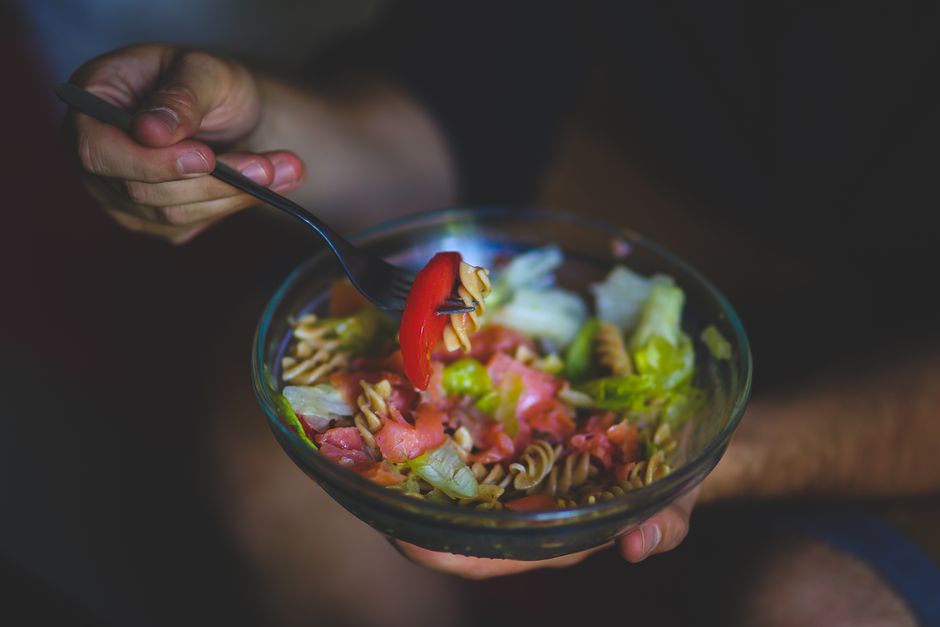
In practice, food need not be elaborate. Frozen vegetables retain their nutrients. Tinned fish and pulses are inexpensive and require no preparation. A reasonable meal assembled in ten minutes is better in every measurable respect than an excellent meal that never gets cooked because the ambition exceeded the energy available.
Practical tips
Some practical points to keep in mind:
- Anchor a new habit to something you already do each day, like your morning coffee.
- Start small and stay consistent rather than aiming for a dramatic change.
- Aim for good enough on busy days instead of skipping entirely.
- Keep the useful option easy to reach and the tempting one a little harder.
The bottom line
None of this needs to be perfect. Take it one small step at a time. Consistency, not intensity, is what makes the difference in the long run.
Frequently asked questions
What is the single most important thing to focus on?
Consistency. A modest routine you actually keep beats an ambitious plan you abandon after a week.
Do I need special equipment or money?
No. Most of what helps is free or low-cost, and the simplest options are usually the ones people stick with.
How long before I notice a difference?
It varies from person to person. Give any new habit a few weeks of consistency before deciding whether it is working for you.
Is this relevant if I'm just starting out?
Yes. You can begin with one small change and build from there. With wellness for everyday life, steady progress beats trying to do everything at once.