 Daily
Daily How Health Literacy And The Flood Of Advice Fits a Real Routine, the Honest Way
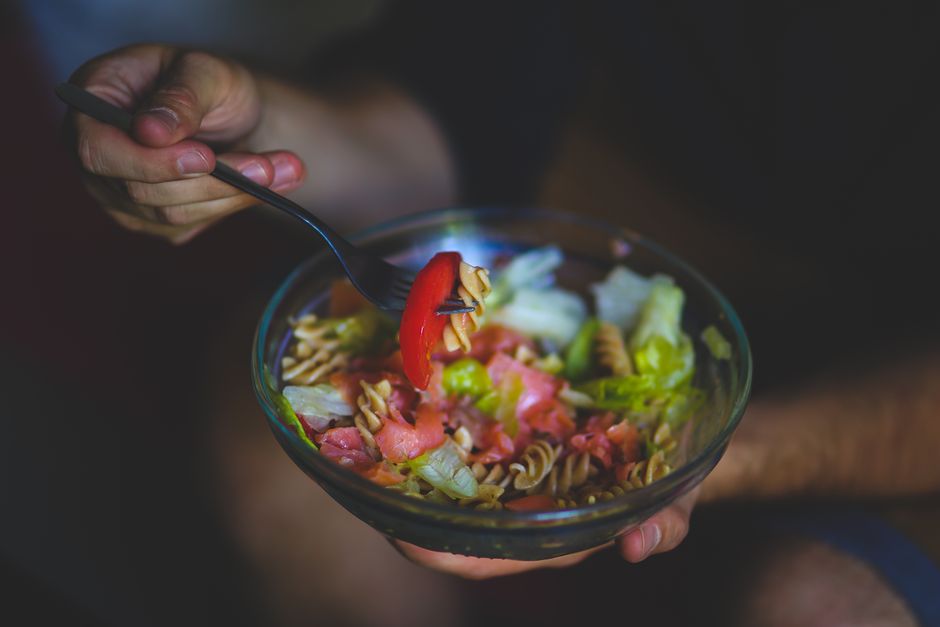
A packed schedule makes health literacy and the flood of advice feel like one more thing to fit in, but it can be simpler than it sounds. The aim here is to keep things realistic and easy to sustain. Let's look at what actually matters with health literacy and the flood of advice, and what you can safely ignore.
The time-poor reality
Be particularly cautious where certainty exceeds the evidence. Nutrition science is challenging because people cannot be locked in metabolic wards for decades. Consequently, most nutritional claims are provisional. Anyone who is entirely sure is telling you something about themselves rather than about food.
If you remember only one thing here, let it be that steady, repeatable habits beat short bursts of effort.
Quick wins that fit any schedule
Be cautious, too, where an explanation is unusually satisfying. Single-cause accounts of complex conditions — one nutrient, one toxin, one behaviour — are memorable precisely because they are simple, and health is not.
The practical takeaway is to keep health literacy and the flood of advice simple enough that it survives a busy week, not just a good one.
Habits that take seconds
More often than not, the reasonable defaults have been stable for a long time and are boring: mostly plants, adequate protein, regular movement including some resistance, sufficient sleep, minimal smoking, moderate or no alcohol, some human contact, appropriate screening. Almost everything else being marketed is optimisation at the margins, and margins matter only after the centre is in order.
It helps to focus on what you can realistically do most days, rather than an ideal you can only manage occasionally. You can read more from MedlinePlus, from the U.S. National Institutes of Health.
Doing less, but consistently
Health literacy is not knowing more facts. It is knowing which facts would change a decision, and how confident one is entitled to be.
The practical takeaway is to keep health literacy and the flood of advice simple enough that it survives a busy week, not just a good one. A complete breakdown is available on liv pure reviews.
Protecting the little time you have
More health information is available now than at any point in history, and it has not made people healthier in proportion. The volume is part of the problem. Advice arrives contradictory, confidently stated, and frequently attached to something for sale.
Making it automatic
Worth keeping in mind: a few habits of interpretation help. Ask what population a claim applies to; a result from twenty athletes may not generalise. Ask what the comparison is; something that outperforms doing nothing may still be worse than the obvious alternative. Ask about the size of an effect, not just its existence, because a statistically significant improvement can be practically irrelevant. Notice when a relative risk is quoted without an absolute one, since doubling a very small risk leaves a very minor risk.
Give yourself room to be imperfect here; a missed day is an event, not a reason to give up.
Practical tips
A few simple things tend to help:
- Aim for good enough on busy days instead of skipping entirely.
- Keep the useful option easy to reach and the tempting one a little harder.
- Start small and stay consistent rather than aiming for a dramatic change.
- Notice what works for you personally, since everyone responds a little differently.
The bottom line
Keep it simple, be patient with yourself, and let small changes add up. The best approach is the one you can keep going with. Start where you are and build slowly from there.
Frequently asked questions
Do I need special equipment or money?
No. Most of what helps is free or low-cost, and the simplest options are usually the ones people stick with.
Is this relevant if I'm just starting out?
Yes. You can begin with one small change and build from there. With health literacy and the flood of advice, steady progress beats trying to do everything at once.
Is this suitable for busy people?
Yes. Most of the ideas here fold into things you already do each day, so they take little extra time.
What is the single most important thing to focus on?
Consistency. A modest routine you actually keep beats an ambitious plan you abandon after a week.